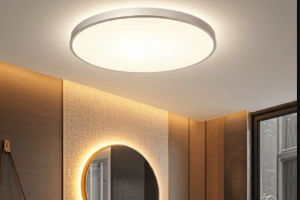
The integration of advanced technology into traditional lighting fixtures marks a significant evolution in home illumination. Smart crystal chandeliers, paired with dedicated application control, represent this convergence, offering users a blend of aesthetic appeal and functional sophistication. This article explores the technical aspects, practical applications, and considerations surrounding these modern lighting solutions.
Chandeliers have historically served as focal points in grand interiors, their designs evolving from simple candleholders to intricate multi-tiered structures adorned with various materials. The primary function remained consistent: provide ambient light Ninpodesign while contributing to the decor.
From Incandescence to LED
Early chandeliers relied on incandescent bulbs, a technology superseded by more energy-efficient alternatives. Halogen bulbs offered brighter light but still generated considerable heat. The advent of Light Emitting Diodes (LEDs) revolutionized lighting, providing longevity, reduced power consumption, and a wider range of color temperatures. This transition was crucial for the development of smart lighting, as LEDs are inherently more adaptable to electronic control.
The Rise of Smart Home Technology
The late 20th and early 21st centuries witnessed the proliferation of smart home devices, ranging from thermostats to security systems. Interconnectivity became a defining characteristic, often managed through centralized hubs or smartphone applications. Lighting, as a fundamental component of any dwelling, naturally integrated into this ecosystem. Smart bulbs and fixtures allowed users to adjust brightness, color, and even schedule their operation, laying the groundwork for more complex solutions like smart chandeliers.
Core Components of a Smart Crystal Chandelier
Understanding the constituent parts of these fixtures is essential for appreciating their capabilities. A smart crystal chandelier is not merely a decorative element; it is an integrated system of hardware and software.
Crystal Elements and Their Optical Properties
The “crystal” in these chandeliers refers to lead glass or, more commonly today, K9 crystal, a high-quality optical borosilicate crown glass. These materials are chosen for their excellent refractive properties, dispersing light into a spectrum of colors. The cut and faceting of each crystal element are meticulously engineered to maximize light reflection and refraction, creating visual sparkle. The number and arrangement of these crystals directly influence the chandelier’s aesthetic and its light distribution pattern.
Integrated LED Modules
Instead of traditional bulb sockets, smart crystal chandeliers incorporate LED modules. These modules are often surface-mounted devices (SMDs) that are compact, durable, and offer precise light control. They are crucial for achieving variable brightness and color temperature. Some advanced models may include RGB (Red, Green, Blue) LEDs, allowing for a spectrum of colored light customization. The placement of these LEDs within the chandelier’s structure is critical for illuminating the crystal elements effectively.
Wireless Communication Modules
The “smart” aspect is contingent upon wireless communication. Most smart crystal chandeliers utilize Wi-Fi or Bluetooth for connectivity. Wi-Fi offers broader range and integration with home networks, allowing for control from virtually anywhere with an internet connection. Bluetooth, while having a shorter range, provides direct local control, often with lower power consumption. Some systems may employ Zigbee or Z-Wave, mesh networking protocols popular in smart home ecosystems, offering robustness and expandability. These modules act as the chandelier’s nervous system, translating commands from the user interface into actionable signals for the lighting elements.
Control Circuitry and Microcontrollers
At the heart of the chandelier’s intelligence is its control circuitry, typically comprising a microcontroller unit (MCU). This MCU processes incoming commands from the wireless module, regulates power to the LED modules, and manages various lighting effects. It acts as the chandelier’s brain, interpreting user input and executing corresponding light adjustments. This circuitry must be robust, energy-efficient, and capable of handling complex light patterns without
performance degradation.
Application Control Interface
The user’s interaction with a smart crystal chandelier primarily occurs through a dedicated application, typically installed on a smartphone or tablet. This application serves as the command center, providing a graphical user interface (GUI) for manipulating the chandelier’s functionalities.
User Interface Design
Effective app design emphasizes intuitiveness and ease of use. Key features often include sliders for brightness adjustment, color wheels for hue selection (in RGB models), and toggles for on/off functions. Preset scenes, allowing users to save specific lighting configurations, are common. For instance, a “dinner party” scene might set a warm, dim light, while a “reading” scene could activate bright, cool white illumination.
Scheduling and Automation
Beyond immediate control, smart apps offer scheduling capabilities. Users can program the chandelier to turn on or off at specific times, mimicking natural light cycles or enhancing security. Automation features allow for more sophisticated scenarios, such as linking the chandelier’s operation to external triggers. For example, motion sensors could activate specific lighting patterns upon entry into a room, or geofencing could turn on lights as a user approaches their home.
Integration with Smart Home Ecosystems
Many smart crystal chandelier apps offer integration with broader smart home ecosystems like Amazon Alexa, Google Assistant, or Apple HomeKit. This enables voice control, allowing users to issue commands vocally without interacting with the app directly. Such integration enhances convenience and positions the chandelier as an integral component of a connected living space. The app often serves as the bridge between the chandelier’s proprietary control system and these overarching platforms.
Firmware Updates
Like any sophisticated electronic device, smart crystal chandeliers may receive firmware updates. These updates are typically delivered wirelessly through the control application. Firmware updates can introduce new features, improve performance, address security vulnerabilities, or fix bugs. The ability to update firmware extends the lifespan of the device and ensures it remains compatible with evolving smart home standards.
Installation and Setup Considerations
Deploying a smart crystal chandelier involves considerations beyond those of a traditional fixture, encompassing electrical, network, and configuration aspects.
Electrical Requirements
Smart chandeliers, despite their advanced features, generally operate on standard household electrical circuits (e.g., 120V or 240V, depending on region). Proper wiring is paramount, often requiring the services of a qualified electrician, especially for new installations or upgrades. The power supply integrated within the chandelier must be compatible with the local electrical grid and capable of reliably powering the LED modules and control electronics. Adequate headroom and ceiling reinforcement are also critical due to the often substantial weight of these fixtures.
Network Configuration for Connectivity
For Wi-Fi-enabled chandeliers, a stable 2.4 GHz Wi-Fi network is typically required. The initial setup usually involves connecting the chandelier to the home network via the control application. This process often entails placing the chandelier in a “pairing” or “discovery” mode, then providing the Wi-Fi credentials through the app. Network stability is crucial; a weak signal can lead to connectivity drops and unresponsive controls. Users with complex network setups (e.g., mesh networks, multiple access points) may need to ensure proper device isolation or configuration for seamless operation.
Physical Mounting and Assembly
Crystal chandeliers, by their nature, can be intricate to assemble and mount. Due to the fragility of crystal elements and the potential weight of the fixture, careful adherence to manufacturer instructions is essential. This often involves suspending a mounting bracket from a ceiling joist or cross-bracing, then carefully attaching the chandelier body and individual crystal strands. The sheer volume of individual crystal elements can make assembly a time-consuming process.
Initial App Pairing and Device Registration
Once physically installed and powered, the final step involves pairing the chandelier with the control application. This typically involves registering the device with the manufacturer’s cloud service (for internet-connected models) and mapping its functions within the app. Users often create virtual “rooms” or “zones” within the app to group multiple smart devices, allowing for synchronized control.
Advantages and Disadvantages
The adoption of smart crystal chandeliers presents a range of benefits and drawbacks that potential users should evaluate.
Enhanced Control and Customization
The primary advantage lies in the unparalleled control offered. Users can precisely adjust brightness, color temperature, and color (if RGB-enabled) to match mood, time of day, or specific activities. This granular control allows for dynamic lighting environments that transcend the capabilities of conventional fixtures. The ability to create and recall specific lighting scenes transforms the chandelier from a static object into a versatile instrument of ambiance. Consider the chandelier as a painter’s palette, with the application as the brush.
Energy Efficiency and Longevity
LED technology is inherently energy-efficient, consuming significantly less power than incandescent or halogen bulbs while producing comparable or superior light output. The lifespan of LEDs is also considerably longer, often tens of thousands of hours, reducing the frequency and cost of replacement. This translates to lower electricity bills and less maintenance, making the upfront investment potentially more cost-effective over time.
Integration within Smart Home Ecosystems
Seamless integration with broader smart home platforms simplifies multi-device management. Voice control, automation routines, and interoperability with other smart devices (e.g., smart blinds, thermostats) create a cohesive and responsive living environment. The chandelier acts as a node within a larger digital web, responding to commands from various points.
Aesthetic Appeal and Modernity
Smart crystal chandeliers retain the traditional elegance of their predecessors while incorporating a modern technological edge. They serve as a statement piece, blending classic design with contemporary functionality. This blend appeals to users seeking both visual opulence and cutting-edge convenience.
Higher Initial Cost
The advanced technology and specialized components involved typically result in a higher upfront purchase price compared to traditional crystal chandeliers. This cost differential is a significant consideration for budgeting.
Dependence on Technology and Connectivity
The “smart” aspects rely entirely on functional technology and reliable connectivity. Network outages, app malfunctions, or device errors can limit the chandelier to basic on/off functionality, or even render it inoperable without manual intervention. This dependence is a potential fragility in the system. If the network is the river of information, a smart chandelier without connectivity is a boat stranded on dry land.
Complexity of Setup and Troubleshooting
While app interfaces aim for simplicity, the initial setup, especially network configuration and device pairing, can sometimes present challenges for less technologically inclined users. Diagnosing and resolving connectivity issues can also require a certain level of technical proficiency.
Potential for obsolescence
Like all technology, smart home devices are subject to rapid evolution. Newer protocols, updated software, and hardware advancements could potentially lead to the obsolescence of older models, both in terms of features and compatibility. Manufacturers’ long-term support for software updates is a crucial factor, but not always guaranteed.
Future Projections and Trends
The trajectory of smart lighting, particularly in high-end decorative fixtures, suggests continued innovation and expanded capabilities.
Advanced Sensor Integration
Future iterations may incorporate more sophisticated sensors directly into the chandelier. Environmental sensors could detect ambient light levels and automatically adjust brightness, or even measure air quality. Occupancy sensors could optimize lighting based on room usage, further enhancing energy efficiency and convenience.
Deeper AI and Machine Learning Integration
The integration of artificial intelligence (AI) and machine learning (ML) holds potential for personalized lighting experiences. Systems could learn user preferences over time, anticipating lighting needs based on routines, external weather conditions, or even biometric data (e.g., sleep cycles). The chandelier could evolve from a reactive device to a proactive assistant, anticipating needs rather than merely responding to commands.
Interoperability and Open Standards
The smart home industry is slowly moving towards greater interoperability through open standards. This trend would allow smart crystal chandeliers to communicate more seamlessly with devices from different manufacturers, reducing fragmentation and enhancing the overall user experience. This would create a more unified digital ecosystem within the home.
Modular and Customizable Designs
While current designs offer some customization, future models might feature modular components within the crystal elements and LED arrays themselves. This could allow users to easily swap out crystal designs, reconfigure light patterns, or upgrade LED modules without replacing the entire fixture, extending lifespan and design flexibility.
In conclusion, smart crystal chandeliers represent a pragmatic convergence of classic aesthetics and contemporary technology. They offer unparalleled control, energy efficiency, and integration within the expanding smart home landscape. While considerations regarding cost, complexity, and technological dependence exist, the advantages often outweigh these factors for individuals seeking advanced illumination solutions that are both functional and visually impactful. As technology progresses, these fixtures are poised to become even more sophisticated and integrated, further blurring the lines between decorative art and intelligent home automation.