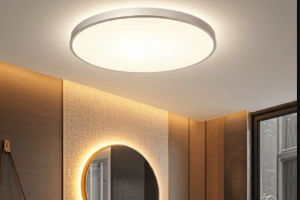
A brass adjustable spotlight ceiling fixture serves as a versatile lighting solution, offering both illumination and directional control. This type of fixture typically consists of a ceiling-mounted base from which one or more spotlight heads extend. The primary material, brass, provides a durable and aesthetically pleasing element, often lending a classic or sophisticated character to a room. The adjustability of the spotlight heads allows users to direct light precisely where it is needed, making it suitable for accentuating artwork, highlighting architectural features, or providing task lighting.
The design of a brass adjustable spotlight Simiglightin ceiling fixture prioritizes functionality alongside visual appeal. The inherent properties of brass, such as its malleability and resistance to corrosion, contribute to the longevity and maintained appearance of the fixture.
Brass as a Material
Brass, an alloy primarily composed of copper and zinc, has been utilized in decorative and functional applications for centuries. Its rich, warm tone can range from a polished, bright yellow to a darker, antiqued patina, allowing for varied design aesthetics. The density of brass also offers a sense of substance and quality to the fixture.
Types of Brass Finishes
- Polished Brass: This finish offers a high sheen and a bright, reflective surface. It requires regular maintenance to prevent tarnishing and maintain its luster.
- Brushed Brass: This finish has a matte, satin appearance achieved through a brushing process. It is less prone to showing fingerprints and smudges compared to polished brass.
- Antique Brass: This finish simulates the appearance of aged brass through chemical treatments, often resulting in darker tones and a more subdued aesthetic.
- Lacquer-Coated Brass: A protective coating is applied to polished or brushed brass to prevent tarnishing and reduce the need for polishing.
Spotlight Head Mechanisms
The adjustability of spotlight ceiling fixtures is achieved through various joint and pivot mechanisms. These allow the user to angle and rotate the light source.
Articulation Points
- Ball Joints: These allow for a wide range of motion, enabling both tilting and swiveling of the spotlight head.
- Hinged Arms: Some fixtures employ hinged arms that permit articulation at one or more points, offering directional flexibility.
- Rotating Cages: The spotlight head itself may be housed within a rotating cage, allowing for 360-degree horizontal movement.
Ceiling Mount Base
The base of the fixture attaches to the ceiling and typically houses the electrical connections. Its design can range from simple and unobtrusive to more decorative, complementing the style of the spotlight heads.
Mounting Systems
- Direct Mount: The fixture attaches directly to a junction box in the ceiling.
- Canopy Mount: A decorative canopy covers the junction box, providing a finished appearance.
Functionality and Application
The adjustable nature of brass spotlight ceiling fixtures makes them practical for a variety of lighting needs. The ability to direct light precisely allows for task-specific illumination or the enhancement of specific visual elements within a space.
Task Lighting
Precise illumination is crucial for activities requiring detailed work or focus. A brass adjustable spotlight can be directed to illuminate a desk, a workbench, or a kitchen counter without casting general light that might be distracting.
Specific Use Cases
- Home Offices: Directing light onto a work surface can reduce eye strain and improve productivity.
- Kitchens: Spotlights can be used for task lighting over countertops or stovetops.
- Workshops: Providing focused light on a project area.
Accent Lighting
Spotlights are frequently employed to draw attention to specific features within a room, such as artwork, photographs, or decorative objects. The beam of light acts as a spotlight, singling out these items against the surrounding décor.
The Purpose of Highlighting
- Art Display: Accentuating the colors and textures of paintings or sculptures.
- Architectural Details: Drawing attention to unique ceiling elements, molding, or wall textures.
- Decorative Objects: Illuminating display shelves or collectible items.
Ambient Lighting Control
While often associated with focused lighting, adjustable spotlights can also contribute to overall ambient light levels. By strategically angling multiple spotlights, one can create a soft, diffused illumination that avoids harsh shadows.
Strategic Placement for Atmosphere
- Washing Walls: Angling spotlights towards walls can create a gentle upward or downward wash of light, contributing to the room’s general brightness.
- Creating Depth: Using multiple spotlights at different angles can add a sense of dimension to a room.
Versatility in Room Types
The design and adjustability of brass adjustable spotlight ceiling fixtures lend themselves to a wide array of interior spaces. Their classic material can bridge the gap between traditional and contemporary aesthetics.
Common Placement Areas
- Living Rooms: For accentuating artwork or providing focused reading light.
- Bedrooms: Over nightstands for individual reading or to highlight decorative elements.
- Hallways: To illuminate artwork or guide pathways.
- Kitchens and Dining Rooms: For task lighting or to highlight specific areas.
Installation and Maintenance
Installing an adjustable spotlight ceiling fixture involves standard electrical wiring practices. Maintenance considerations are primarily related to the cleaning and care of the brass components.
Electrical Connections
The fixture connects to a power source through the ceiling’s electrical wiring. This typically involves connecting wires from the fixture to corresponding wires in a junction box.
Safety Precautions
- Power Disconnection: Always ensure the power supply to the circuit is turned off at the breaker box before beginning installation.
- Wire Stripping and Connection: Use appropriate tools to strip wire insulation and secure connections using wire nuts or connectors.
- Grounding: Ensure the fixture is properly grounded for electrical safety.
Luminaire Mounting
The fixture is secured to the ceiling using screws or mounting brackets that attach to the junction box or structural elements.
Securing the Fixture
- Mounting Bracket: Many fixtures come with a mounting bracket that attaches to the junction box first, to which the main body of the fixture is then attached.
- Screw Fastening: The fixture is then secured in place with screws.
Cleaning and Care of Brass
Brass, particularly when unlacquered, can tarnish over time. Regular cleaning and polishing are necessary to maintain its appearance.
Cleaning Methods
- Mild Soap and Water: For routine cleaning of dust and light grime, a soft cloth dampened with mild soap and water can be used.
- Brass Polish: For tarnished areas, a commercial brass polish can be applied according to product instructions.
- Natural Cleaners: Lemon juice and baking soda paste can be used as an alternative cleaning agent for brass.
Preventing Tarnish
- Lacquer Coating: Fixtures with a clear lacquer coating are more resistant to tarnishing.
- Avoid Harsh Chemicals: Do not use abrasive cleaners or harsh chemicals, as these can damage the brass finish.
- Regular Dusting: Frequent dusting will help prevent the accumulation of dirt and moisture that can lead to tarnishing.
Types of Brass Adjustable Spotlight Ceiling Fixtures
Adjustable spotlight ceiling fixtures made of brass come in various configurations, differing in the number of spotlights, their arrangement, and overall design.
Single Spotlight Fixtures
These fixtures feature a single adjustable spotlight head mounted on a ceiling base. They are often chosen for targeted illumination or when a minimalist approach is desired.
Applications for Single Spotlights
- Highlighting a Specific Item: Ideal for showcasing a single piece of art or a small decorative object.
- Task Lighting: Providing focused light for a small workspace or reading area.
Multi-Spotlight Bars
These fixtures consist of a linear bar with multiple adjustable spotlight heads attached. They offer broader coverage and can illuminate a larger area or multiple points of interest.
Design Variations in Multi-Spotlight Bars
- Two-Light Bars: Suitable for illuminating longer surfaces or two distinct areas.
- Three or Four-Light Bars: Providing more extensive coverage and greater flexibility in directing light.
- Track Systems: Some multi-spotlight fixtures are mounted on a track, allowing for further adjustment of the spotlight positions along the track.
Clustered or Swarm Designs
Some fixtures feature multiple spotlights clustered together, often with independently articulating heads. These can create a more dynamic visual effect and offer a wider dispersion of light.
Unique Aesthetic Approaches
- Orbital Designs: Spotlights arranged in a circular or semi-circular pattern.
- Organic Arrangements: Heads are positioned in a more scattered, seemingly random fashion.
Integrated LED Spotlights
Many modern brass adjustable spotlight ceiling fixtures incorporate integrated LED light sources. These offer energy efficiency and long operational life.
Advantages of Integrated LEDs
- Energy Savings: LEDs consume significantly less energy than traditional incandescent or halogen bulbs.
- Longevity: Integrated LEDs have an extended lifespan, reducing the need for frequent bulb replacements.
- Compact Design: The compact nature of LEDs allows for sleeker fixture designs.
Lighting Considerations and Bulb Types
The choice of bulb and the overall lighting design for a brass adjustable spotlight ceiling fixture are critical to achieving the desired effect. The lumen output, color temperature, and beam angle of the bulb all play a role.
Lumen Output and Brightness
Lumen is the measure of the total amount of visible light emitted by a source. The required lumen output will depend on the intended application of the spotlight.
Determining Appropriate Brightness
- Task Lighting: Higher lumen output might be necessary for areas requiring intense light.
- Accent Lighting: Lower lumen output often suffices to gently highlight an object without overpowering it.
- General Illumination: For contributing to ambient light, a moderate lumen output is typically used.
Color Temperature
Color temperature, measured in Kelvin (K), describes the perceived warmth or coolness of the light. Different color temperatures can influence the mood and atmosphere of a space.
Understanding Color Temperatures
- Warm White (2700K – 3000K): Emits a soft, yellowish light, reminiscent of incandescent bulbs. This is often preferred for living spaces and bedrooms to create a cozy ambiance.
- Cool White (3500K – 4100K): Provides a more neutral, white light. This is suitable for kitchens and bathrooms where clarity is important, and for task lighting.
- Daylight (5000K – 6500K): Produces a bright, bluish-white light, similar to natural daylight. This is often used for areas where detail work is performed or to enhance the vibrancy of colors.
Beam Angle
The beam angle of a spotlight determines how widely or narrowly the light is dispersed. This is a crucial factor in how effectively the spotlight can highlight a specific area.
Selecting the Right Beam Angle
- Narrow Beam Angle (e.g., 15-30 degrees): Creates a focused, intense beam of light, ideal for highlighting small objects or distant features.
- Medium Beam Angle (e.g., 30-60 degrees): Offers a broader spread of light, suitable for illuminating larger areas or collections of objects.
- Wide Beam Angle (e.g., 60+ degrees): Distributes light over a wider area, often used for more general accent lighting or to wash walls.
Bulb Type Compatibility
Most brass adjustable spotlight ceiling fixtures utilize standard socket types, such as GU10, MR16, or E26/E27. The user must ensure the replacement bulbs are compatible with the fixture’s socket and wattage limits.
Common Bulb Types
- GU10: Typically found in higher-voltage spotlight fixtures, often used with LED bulbs. These have a twist-and-lock base.
- MR16: A low-voltage bi-pin bulb, often requiring a transformer. Popular for accent lighting.
- E26/E27 (Standard Edison Screw): A common screw-in base, found in a wide variety of lighting fixtures.
The integration of a brass adjustable spotlight ceiling fixture into an interior design plan offers a practical and visually appealing method for controlling light. Its inherent adjustability allows for precise illumination, transforming ordinary spaces into highlights of curated design. As a functional element, it addresses both the need for task-specific light and the desire to accentuate visual elements, all while maintaining a statement of material quality.